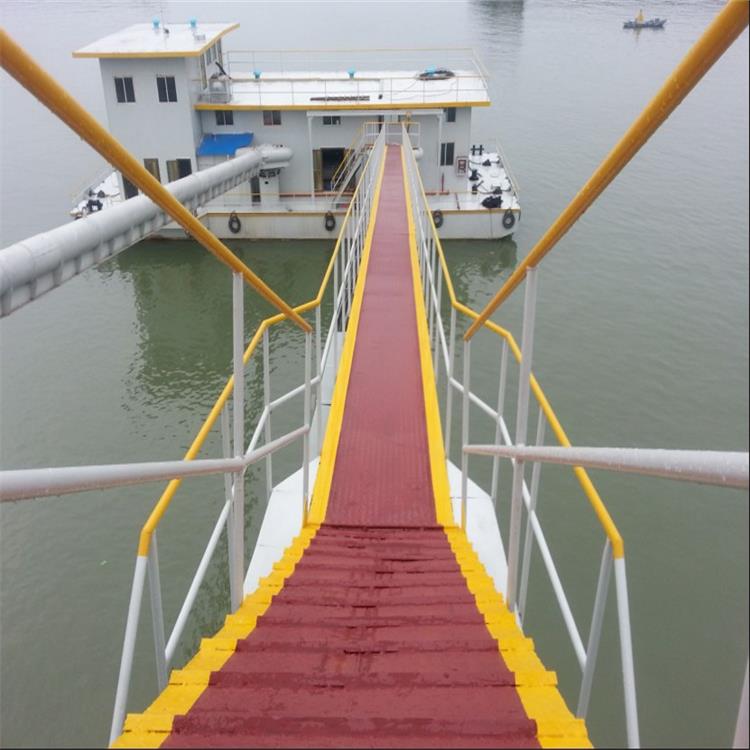
A floating water intake vessel is flexible and efficient mobile equipment for water intake. It is widely used for municipal water supply, industrial water intake, agricultural irrigation, emergency drought relief, and other tasks. Its main advantages are adaptation to water level fluctuations, ease of deployment, and controllable investment. It eliminates the terrain and water level limitations typical of traditional stationary water intake structures. When purchasing a floating water intake vessel, it is necessary to consider operating conditions, product quality, manufacturer capabilities, maintenance, and other factors. This guide summarizes the key points of the entire procurement process for practical use by customers.
I. Pre-purchase preparation: defining needs as the basis for equipment selection
Before purchasing, the main requirements should be clarified to avoid impulsive purchases. Particular attention is paid to three aspects.
1. Defining key parameters of operating conditions
The suitability of the equipment to operating conditions is a decisive factor in selection. The water intake environment and its requirements must be studied. Based on hydrological conditions, the type of water source, water level fluctuation, water body depth, flow velocity, and sand content in the water are specified. For a water level fluctuation of up to 20 m, a swinging arm design is used; for a fluctuation of 30 m or more, a multi-stage floating design is recommended. During low-water periods, the depth for small floating vessels should be at least 1.0 m, and for large ones, at least 2.0 m. The water intake capacity is determined by the daily water intake volume to select the flow rate of a single vessel and configure the pump units. For industrial facilities with high water consumption, preference is given to modular products that allow capacity expansion. Environmental requirements take into account the corrosiveness of the water body, wave intensity, and extreme temperatures, which serve as the basis for material selection.
2. Defining functional and maintenance requirements
Functional requirements are established based on the operating mode. For unmanned operation, the vessel must be equipped with a PLC control system and monitoring modules; for normal conditions, a basic control mode is sufficient. Preference is given to products with easy repair and standardized wear parts to reduce maintenance costs. For emergency situations, rapid deployment of equipment is important, and for water source protection zones, quiet operation is required. For overseas projects, the possibility of disassembly and the availability of international certifications are taken into account.
3. Defining budget and regulatory requirements
The procurement budget is planned by considering both initial costs and costs over the entire service life to avoid low-quality products at excessively low prices. For government procurement, relevant regulations are followed, and the procurement procedure and qualification requirements for suppliers are clarified. For non-government procurement, a warranty period of at least 2 years and acceptance criteria are established to comply with procedural standards.
II. Key points in equipment selection: quality, suitability to operating conditions, and durability
The performance characteristics of a floating water intake vessel determine its operational stability and service life. Particular attention is paid to the hull design and main components.
1. Hull design selection
The hull material is selected according to operating conditions. A steel hull offers high strength and corrosion resistance, suitable for complex water bodies and high capacity. When using Q345B steel, the service life exceeds 15 years. A fiberglass hull is lightweight in operation and easy to maintain, intended for fresh water with medium to low flow rates, with a service life of 30 years or more. A reinforced concrete hull with a metal mesh has a good price-performance ratio but low impact resistance, suitable only for small temporary installations. The design includes watertight compartments, and the heel angle is limited to 7–8°. For large vessels, a twin-hull design is used. For significant water level fluctuations, a swinging arm connection is preferred.
2. Selection of main components
Among the main components, pump units and the mooring system are important. Preference is given to vertical long-shaft pumps or variable-frequency centrifugal pumps. The impellers are made of high-chromium alloy. The use of a variable-frequency drive can reduce energy consumption by 10–20%. The pump power must match the flow rate and head and meet energy-saving standards. The mooring system is equipped with anchor devices, cables, and anti-impact fenders. The water intake head is fitted with debris cleaning devices, and for special water bodies, a waste shredder is additionally installed to improve equipment reliability.


